What if the very architectural features that make your Sydney terrace beautiful are the same ones inviting toxic spores into your living room? You’ve…
What if the very architectural features that make your Sydney terrace beautiful are the same ones inviting toxic spores into your living room? You’ve likely spent countless hours scrubbing walls and using supermarket sprays, only to have that familiar earthy smell return within weeks. It’s frustrating to feel like you’re losing the battle against mould in terrace house Sydney settings, especially when you’re worried about rising damp destroying your original sandstone foundations. You aren’t alone; a significant proportion of older homes in Sydney are currently battling these moisture issues due to porous materials and high humidity levels that often exceed 60%.
We promise to show you why these heritage properties are uniquely vulnerable and how to eliminate the problem permanently without damaging your home’s character. You’ll learn the difference between simple condensation and structural rising damp, which can cost between $2,000 and $5,000 per room to treat. We’ll also preview the professional Goldmorr System that uses non-toxic fogging to kill airborne spores, ensuring your family breathes clean air again. It’s time to stop the temporary fixes and finally secure your home’s future.
Key Takeaways
- Understand why heritage construction and shared party walls make Sydney terraces “mould magnets” and how to address these unique structural vulnerabilities.
- Learn to distinguish between structural rising damp and lifestyle-driven condensation so you don’t waste money on the wrong treatment.
- Discover why subfloor ventilation is the most effective permanent fix for the musty smells and moisture traps common in Victorian-era homes.
- Find out why the professional Goldmorr System is the safest way to eliminate mould in terrace house Sydney properties without damaging delicate heritage lath and plaster.
- Identify the hidden health risks of airborne mycotoxins and why surface cleaning alone won’t protect your family from recurring spores.
Table of Contents
- Why Sydney Terrace Houses are Prone to Mould Growth
- Identifying the Source: Rising Damp vs. Condensation
- The Structural and Health Risks of Inaction
- Effective Remediation and Prevention Strategies
- Professional Mould Removal: The Goldmorr Advantage
Why Sydney Terrace Houses are Prone to Mould Growth
Sydney’s iconic terrace houses, built primarily between 1850 and 1910, are architectural treasures that define the character of suburbs like Paddington, Surry Hills, and Balmain. However, these heritage builds are also notorious “mould magnets.” Their design creates a perfect storm for moisture retention because these properties were built as row houses. They share party walls with neighbors, meaning there’s no air gap between buildings to allow for natural drying. If your neighbor has a drainage issue or a leaking pipe, that moisture often transfers directly into your structural brickwork. There’s simply nowhere for the dampness to escape.
The core of the problem lies in the materials used during the Victorian and Edwardian eras. Most of these homes sit on porous sandstone foundations. Sandstone acts like a giant sponge, drawing groundwater up from the soil and into your living spaces. Without modern barriers, this moisture fuels the growth of Indoor mold, which can quickly spread through heritage lath and plaster walls. Dealing with mould in terrace house Sydney environments requires more than just a surface wipe; it demands an understanding of how these 100 year old structures breathe, or fail to breathe.
The Architectural Flaws of the Victorian Era
Most Victorian builds were constructed without a functional damp-proof course. In modern construction, this is a plastic or slate barrier that stops water from climbing. In older double-brick terraces, moisture travels upward through the brickwork via capillary action, a process known as rising damp. Because these houses are narrow and deep, they often lack the cross-ventilation needed to dry out this internal moisture. Efflorescence is the white powdery salt often seen on Sydney terrace bricks that indicates water is moving through the wall and evaporating on the surface. When you see these salts, it’s a clear warning that the subfloor is saturated and mould spores are likely colonizing your floorboards.
Sydney Climate Factors: Humidity and Salt Air
Sydney’s coastal climate exacerbates these structural weaknesses. The city’s average relative humidity levels frequently fluctuate between 60% and 70%. When humidity stays above 60%, mould colonies can survive and thrive on atmospheric moisture alone, even without a visible leak. Seasonal rainfall during the humid summer months often leaves the ground under these old foundations damp for weeks. In coastal suburbs, salt-laden air makes the situation worse. Salt is hygroscopic, which means it naturally attracts and traps moisture against the building’s exterior. This “sticky” environment, combined with the lack of airflow in narrow terrace floorplans, makes professional mould remediation a necessity rather than a luxury for heritage property owners.
Identifying the Source: Rising Damp vs. Condensation
Identifying the source of moisture is the first step toward a permanent solution. In many Sydney terraces, homeowners confuse structural rising damp with lifestyle-induced condensation. While both lead to the same unsightly growth, their treatments are vastly different. Rising damp is a structural failure where groundwater is pulled upward through the masonry. Condensation, however, is an “air-down” problem caused by high humidity and poor ventilation. If you are struggling with recurring mould, you must determine if the water is coming from the earth or the air. Misdiagnosing the cause often leads to expensive, ineffective repairs that fail to stop the spores from returning.
Signs of Rising Damp in Sydney Terraces
Rising damp is a common battle for anyone managing mould in terrace house Sydney properties. Because original sandstone footings are highly porous, they can wick moisture up from the ground to a height of 1.2 metres. This creates a specific set of symptoms. You will often notice a sharp, earthy smell emanating from beneath the floorboards. Look for “tide marks” on your lower internal walls; these are brownish or yellowish stains that indicate the maximum height the water has reached. Other red flags include peeling paint on skirting boards and white, crusty salt deposits on the bricks. If the damage is concentrated at the bottom of the wall, the issue is almost certainly structural dampness rising from the subfloor.
Lifestyle Factors and Condensation
Modernized terraces often suffer from condensation because they’ve been sealed too tightly to improve energy efficiency. Without adequate airflow, everyday activities like drying clothes indoors or taking hot showers create steam traps. In small terrace layouts, this moisture has nowhere to go. It eventually settles on the coldest surfaces, usually the external-facing walls. You might notice “ghosting” in these areas. These are dark, shadowy streaks that follow the pattern of the wall structure. This occurs due to thermal bridging, where heat escapes through solid brick faster than the surrounding area, creating cold spots where moisture flash-condenses. According to NSW Health advice on mould, managing these humidity levels is critical for preventing respiratory issues. If you are unsure which moisture source is affecting your home, an expert mould inspection can provide the clarity you need to act quickly.

The Structural and Health Risks of Inaction
Ignoring a mould infestation in your Sydney terrace is a gamble with both your health and your property’s value. Under the NSW Residential Tenancies Act, mould is often classified as an “urgent repair” if it poses a risk to the health of occupants or the safety of the structure. This isn’t just a cosmetic annoyance that you can paint over. It’s a biological threat. If you delay remediation, the cost of repair escalates as the spores migrate from the surface deep into the structural fabric of your home. Dealing with mould in terrace house Sydney settings requires immediate intervention to prevent permanent damage to irreplaceable heritage features.
Health Impacts: More Than Just a Musty Smell
The primary danger of living in a damp terrace is the constant inhalation of airborne spores. These spores release mycotoxins that can lead to chronic health issues. According to the Australian Government guidance on mould, exposure is linked to a range of respiratory conditions. Common symptoms include asthma flare-ups, allergic rhinitis, and persistent chronic fatigue. Children and the elderly are at the highest risk because their immune systems are more vulnerable to poor indoor air quality. In some cases, exposure to specific toxic strains like black mould can cause even more severe neurological and inflammatory responses. You shouldn’t wait for these symptoms to appear before calling for a professional inspection.
Structural Decay of Heritage Features
Mould is a living organism that consumes organic building materials. In a century-old terrace, this means the fungus is literally eating your home. Heritage lath and plaster walls are particularly susceptible because they provide a porous, organic substrate that mould loves. Once moisture takes hold, it weakens the bond of the plaster, leading to cracking and eventual collapse. The danger extends to the hidden parts of your home as well. High humidity in the subfloor often leads to “dry rot” in original floor joists and rafters. This wood rot can compromise the structural integrity of the entire building if the moisture source isn’t addressed. 100-year-old masonry and timber are resilient, but they cannot withstand a sustained fungal attack. Protecting your investment means stopping the growth before it reaches the structural bones of the property.
Effective Remediation and Prevention Strategies
Many homeowners reach for a bottle of bleach the moment they spot mould in terrace house Sydney properties. This is a critical mistake. Bleach is mostly water. While it might turn the surface white temporarily, the water content actually feeds the fungal roots deep inside porous heritage bricks. You’re essentially watering a weed. Permanent removal requires a strategy that targets the subfloor, the walls, and the invisible spores currently floating in your air. If you don’t address the environmental conditions, the growth will return every time the humidity spikes.
Why DIY Methods Fail in Heritage Homes
Clove oil is a popular “natural” suggestion in Sydney community groups. It’s a myth that this kills mould permanently in old buildings. While it can inhibit growth on non-porous surfaces, it won’t penetrate the deep-seated roots inside 19th-century masonry. Using harsh over-the-counter sprays can also strip original lime washes or damage delicate lath and plaster. Most importantly, surface cleaning ignores the 90% of spores that are airborne. If you only clean the wall, those invisible spores will simply land and start a new colony within days. You need a solution that treats the entire volume of the room, not just the visible spots.
Mechanical Subfloor Ventilation
The most effective way to protect a Sydney terrace is to address the moisture trap beneath your feet. Mechanical subfloor ventilation uses solar or electric fans to pull damp, stagnant air out from under the house. This is the #1 fix for long, narrow terrace blocks where natural cross-ventilation is physically impossible. These systems create a constant stream of fresh air that dries out sandstone footings and prevents rising damp from reaching your living areas. If your dampness is caused by a sudden plumbing failure rather than rising ground moisture, you’ll need professional water damage repair before installing a permanent ventilation system.
In narrow floorplans, humidity gets trapped easily. Using a high-quality dehumidifier can help keep relative humidity below the 60% threshold where colonies thrive. However, if an infestation is already established, you need professional air purification. Master technicians use industrial-grade air scrubbers to capture microscopic spores that standard house cleaning can’t reach. This process ensures your home smells fresh and stays safe for pets and children. Don’t wait for the musty smell to return. Call us today for an expert assessment and stop the cycle of recurring mould for good.
Professional Mould Removal: The Goldmorr Advantage
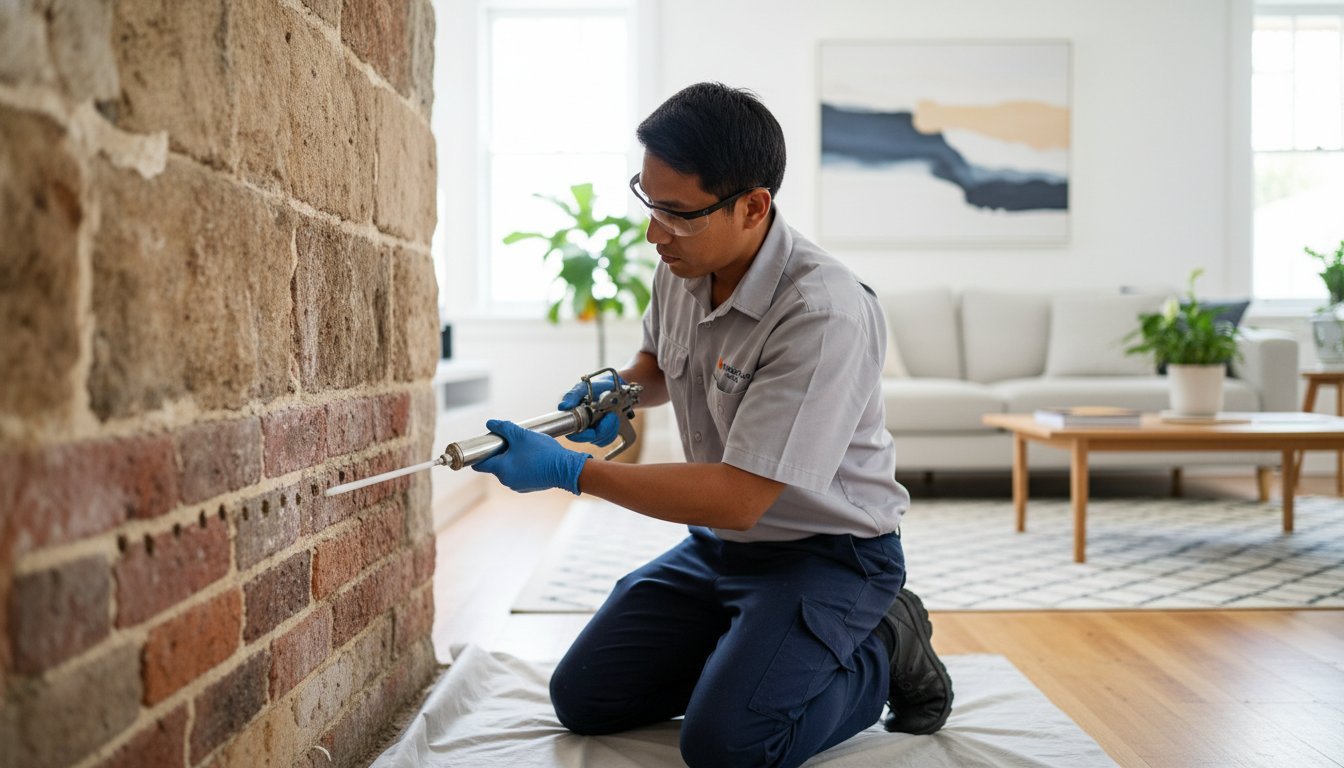
When dealing with mould in terrace house Sydney properties, traditional cleaning methods often fail because they don’t reach the hidden voids within double-brick walls or ornate ceiling cavities. Our master technicians use the industry-leading Goldmorr System to solve this problem. This non-invasive, biodegradable solution is designed specifically for complex structures where spores have migrated into hard-to-reach areas. You can trust our team to provide you with peace of mind, knowing that we aren’t just hiding the issue but eliminating it at a molecular level. Our 3-step process ensures a comprehensive result: a detailed inspection, surface remediation using GM6000, and a final fogging treatment to neutralize airborne threats.
Property owners often worry about the impact of chemicals on their heritage furniture or the safety of their pets. The Goldmorr products we use are biodegradable and safe for your family and the environment. Unlike aggressive industrial cleaners that can bleach original timber finishes or damage 19th-century fabrics, our system is gentle on materials while being lethal to fungal colonies. We understand the urgency of restoring your home’s safety, which is why we’ve streamlined our workflow to move you from a worried property owner to a reassured customer in as few steps as possible. It’s that simple. It’s that easy.
The Goldmorr Fogging Process Explained
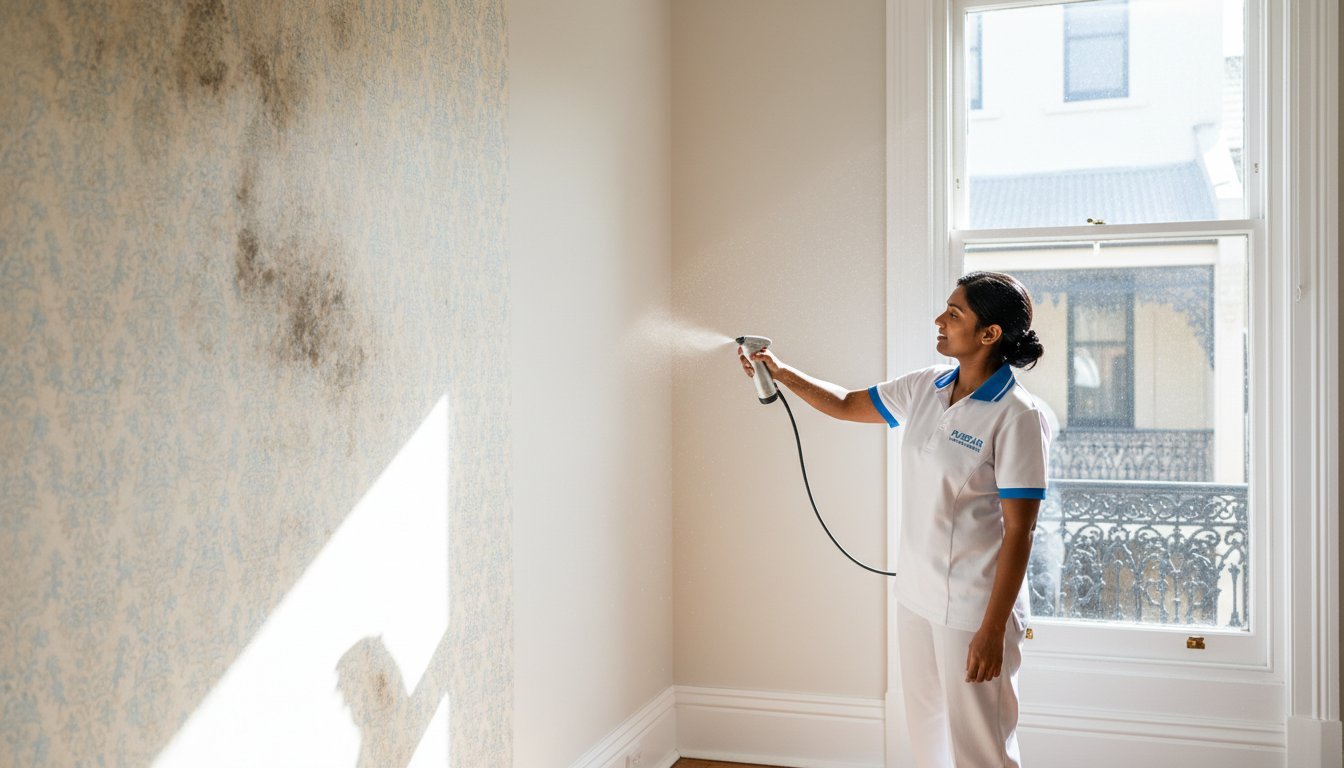
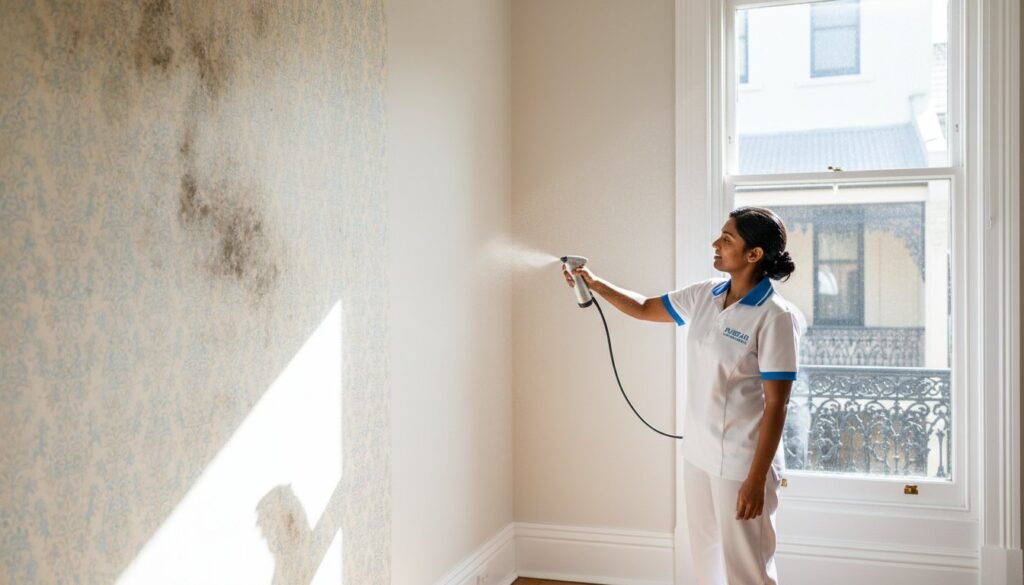
The cornerstone of our expert identity is the biodegradable fogging process. We use a specialized agent called GM2000 that is dispersed as a fine mist throughout your home. This mist travels exactly where mould spores go, reaching behind lath and plaster walls, inside intricate Victorian cornices, and through narrow ceiling vents. This method is far superior to manual scrubbing because it eliminates the microscopic airborne spores that cause recurring infestations. Most Sydney terraces can be treated in a single day, allowing you to return to a safe environment without the need for weeks of disruptive construction or demolition.
Restoring Air Quality with HEPA Scrubbing
Even after the visible growth is gone, that lingering “death smell” of mould can persist in old terrace rooms. We utilize non-mechanical air scrubbing and industrial-grade HEPA filters to clear the air of dead spores and volatile organic compounds. This process restores the fresh, clean scent your heritage home deserves. Before we finish, our team can perform professional testing to confirm that spore counts have returned to safe, natural levels. If you’re ready to reclaim your living space from musty odors and health risks, mould removal sydney experts are ready to help. Send us images of your affected rooms today to get an affordable quote and schedule your cleaning. We will beat any written quote by 10%, ensuring you get the best professional protection for your investment.
Protect Your Heritage Investment and Family Health
Living in a piece of history shouldn’t mean compromising your well-being. You now know that the battle against mould in terrace house Sydney environments requires a two-pronged approach: drying the subfloor and eliminating invisible airborne spores. Heritage properties are resilient, but they cannot survive sustained moisture levels above 60% without professional intervention. By choosing the right ventilation and remediation strategies, you stop structural decay and respiratory risks before they become permanent problems.
Our master technicians use the world-leading Goldmorr System to provide a safe, biodegradable, and non-invasive solution for your home. This process is perfectly suited for delicate heritage furniture and intricate architectural details. We are committed to providing the most effective service at the best price; we will beat any written quote by 10%. Don’t let a musty smell dictate your quality of life. Don’t wait for the problem to worsen—get your affordable Sydney terrace mould quote today!
Take the first step toward a fresh, healthy home today. Its that simple. Its that easy.
Frequently Asked Questions
Is mould common in Sydney terrace houses?
Yes, mould is extremely common in these properties due to their age and specific design. A significant proportion of older homes in Sydney suffer from moisture issues because they were built without modern damp-proof courses or adequate subfloor gaps. High humidity levels in the city, which often exceed 60%, provide the perfect environment for spores to thrive in narrow, poorly ventilated terrace floorplans.
Does the landlord or tenant pay for mould removal in NSW?
The landlord is generally responsible for remediation if the issue stems from structural defects like rising damp or a leaking roof. Under NSW legislation, mould is often classified as an urgent repair that requires immediate attention from the property owner. However, if the tenant’s lifestyle, such as drying clothes indoors without ventilation, caused the growth, they may be held liable for the cleaning costs.
Can I remove black mould from terrace walls myself?
DIY removal is not recommended because surface scrubbing only treats about 10% of the actual problem. Heritage terrace walls are highly porous, meaning the roots of the fungus stay embedded in the brickwork even after you’ve used a supermarket spray. You also risk spreading millions of airborne spores throughout your home. Professional remediation is the only way to ensure the colony is neutralized without damaging original finishes.
What is the best way to prevent rising damp in an old Sydney house?
Installing a mechanical subfloor ventilation system is the most effective preventative measure for older properties. These systems extract damp air from beneath the sandstone foundations, preventing groundwater from wicking up into your living spaces. You should also ensure that external weep holes are not blocked and that the ground level outside hasn’t been raised above the original damp-proof course during recent renovations.
How much does professional mould remediation cost in Sydney?
Professional mould removal services in Australia typically range from $500 to $3,000 on average for standard treatments. For a whole house remediation, costs can be between $500 and $6,000 or more depending on the severity of the infestation. A professional mould inspection in the Sydney area typically costs between $150 and $350. We offer competitive pricing and will beat any written quote by 10%.
Is the Goldmorr System safe for my heritage furniture and pets?
Yes, the Goldmorr System is completely safe for pets, children, and delicate heritage items. The GM2000 fogging agent is biodegradable and non-toxic, meaning it won’t leave harmful residues on your 19th-century furniture or antique fabrics. It’s a non-invasive process that eliminates spores without the need for harsh, corrosive chemicals that could damage original lime plaster or timber finishes.
How long does it take to get rid of the musty smell in a terrace?
Most musty odors are eliminated within 24 hours when using professional air scrubbing and fogging. While DIY sprays only mask the scent temporarily, our master technicians use industrial HEPA filters to remove the volatile organic compounds that cause the smell. Once the moisture source is addressed and the airborne spores are neutralized, your home will smell fresh and clean almost immediately.
Can subfloor ventilation stop mould from coming back?
Yes, subfloor ventilation is the most reliable way to prevent recurrence by removing the stagnant, damp air that feeds fungal growth. This addresses the primary cause of mould in terrace house Sydney properties by keeping the area under your floorboards dry. It’s a permanent structural fix that works 24/7 to ensure your heritage home remains a healthy environment for your family and pets.