According to a 2022 survey, 50% of Australians reported mould or dampness in their homes, and 39% of regions in New South Wales currently show a high…
According to a 2022 survey, 50% of Australians reported mould or dampness in their homes, and 39% of regions in New South Wales currently show a high prevalence of mould in rental properties. If you’re living in an older Sydney terrace or a modern apartment, these aren’t just statistics. They represent a direct threat to your infant’s developing respiratory system. You’re likely worried about unexplained coughs or wondering if a quick scrub with vinegar is enough to protect your family. It is stressful to feel like your home’s air might be unsafe, but your instinct to take immediate action is correct.
This guide provides a professional roadmap on how to keep baby safe from mould by identifying hidden moisture and using non-toxic, proven methods to eliminate spores. You’ll learn to recognize infant-specific symptoms, use a checklist for hidden nursery growth, and understand why the Goldmorr System is the industry leading choice for Sydney parents. We will move you from confusion over DIY cleaning to the total confidence of a scientifically verified healthy home. It’s time to stop the worry and ensure your baby breathes clean, safe air every single night.
Key Takeaways
- Understand why an infant’s rapid respiratory rate increases their risk of mycotoxin exposure and how to identify early warning signs.
- Perform a 360-degree nursery audit to locate hidden hotspots and learn how to keep baby safe from mould through strategic furniture placement.
- Maintain the nursery humidity “Goldilocks” zone between 40% and 60% to prevent vaporisers and humidifiers from triggering accidental outbreaks.
- Discover why toxic DIY treatments like bleach are ineffective and how the professional Goldmorr System safely eliminates airborne spores.
- Address structural root causes like rising damp and poor subfloor ventilation to ensure a permanently healthy environment for your family.
Table of Contents
- Why Babies are Uniquely Vulnerable to Mould in Sydney Homes
- The 360-Degree Nursery Audit: Identifying Hidden Mould Hotspots
- Vaporisers, Humidifiers, and Ventilation: Balancing Comfort and Safety
- Professional Mould Remediation: The Safe Goldmorr Advantage for Families
- Long-Term Prevention: Subfloor Ventilation and Sydney Home Maintenance
Why Babies are Uniquely Vulnerable to Mould in Sydney Homes
Infants aren’t just small adults. Their physiology makes them highly susceptible to indoor air pollutants. A newborn’s respiratory rate is significantly faster than an adult’s; they take between 30 and 60 breaths per minute. This means they inhale a much larger volume of air relative to their body weight. If that air contains invisible fungal spores, their tiny lungs act like a high speed filter for toxins. Understanding how to keep baby safe from mould starts with recognizing that their immune systems are still learning how to defend against environmental threats. You must treat air quality as a primary pillar of nursery safety.
Sydney’s unique climate adds another layer of risk for local families. With coastal humidity frequently exceeding 70% and persistent harbour fog, moisture is a constant visitor in many homes. Data from 2022 shows that 50% of Australian households experienced dampness or mould in the previous year. In New South Wales, 39% of regional rental markets are currently flagged for high mould prevalence. These conditions make nurseries prime real estate for fungal growth, especially in older Sydney terrace houses or apartments with restricted airflow. Because babies spend 14 to 17 hours a day in their sleeping environment, even a small colony can have a massive impact.
Wiping away a dark patch on a windowsill is a temporary fix, not a professional solution. Mould releases microscopic spores that stay suspended in the air long after the visible stain is gone. These airborne particles are the primary cause of health problems associated with mold, as they are easily inhaled into an infant’s deep lung tissue. Surface cleaning with bleach often fails to kill the root system and may actually introduce more moisture to the material. You need a strategy that addresses the air your child breathes, not just the surfaces you see.
Infant Symptoms of Mould Exposure to Watch For
Don’t ignore a persistent “cold” that never seems to clear. If your baby experiences chronic wheezing, coughing, or congestion that improves when they leave the house, mould is a likely culprit. Skin reactions are another common sign; fungal spores can trigger unexplained rashes or worsen existing eczema. Trust your senses. If you detect a musty or earthy smell in the nursery, even if you can’t see growth, your nose is detecting volatile organic compounds that signal a hidden infestation. Act immediately if these signs appear.
The Long-Term Risks of Untreated Mould
Exposure during the first year of life is a significant risk factor for developing childhood asthma later in life. Chronic inflammation from inhaled spores disrupts an infant’s sleep quality, leading to irritability and developmental fatigue. Mycotoxins are toxic secondary metabolites produced by fungi that can cause severe neurological and respiratory damage in pediatric patients by suppressing their immature immune responses. Protecting your child today prevents a lifetime of respiratory struggles. It’s that simple. It’s that easy to prioritize their health by choosing professional remediation over DIY guesswork.
The 360-Degree Nursery Audit: Identifying Hidden Mould Hotspots
Mould is a master of disguise. While you might keep a tidy nursery, the most dangerous colonies often grow where your eyes don’t reach. The first step in how to keep baby safe from mould is performing a literal deep dive into the room’s layout. In many Sydney homes, the “Cold Wall” effect is the primary culprit. This happens when heavy furniture, like a wardrobe or a wooden cot, is pushed flush against an external wall. Because air cannot circulate in that narrow gap, condensation builds up as the warm indoor air hits the cold masonry. This creates a damp, dark microclimate that is perfect for fungal growth. Always leave a 5cm gap between furniture and external walls to allow for vital airflow.
Soft goods and window dressings are another often overlooked risk. Heavy blockout curtains are essential for a baby’s sleep, but in Sydney’s humid climate, they act as massive moisture magnets. Dust and skin cells trapped in the fabric provide the organic “food” mould needs to thrive. Check the folds of your curtains and the back of plush toys regularly. Following Boston Children’s Hospital mold prevention advice, parents should prioritize moisture control by ensuring these porous items are kept dry and well ventilated. If you find a musty smell in a corner with no visible growth, the spores are likely hiding in the fabric or behind the skirting boards.
Mattress and Bedding Hygiene
Your baby’s body heat can cause significant condensation to form directly under their mattress, especially if the cot has a solid base rather than slats. Organic fillings like wool or coconut coir are popular for their breathability, but they can become a liability if they trap moisture. Synthetic materials often resist fungal growth better, but regardless of the material, you should flip the mattress weekly. Ensure the nursery stays between 40% and 60% humidity to prevent the bedding from becoming a damp breeding ground. If you suspect a moisture issue, consult our specialists to ensure your nursery’s air quality is safe.
Identifying Mould on Walls and Ceilings
It’s vital to distinguish between harmless surface mildew and structural infestations. Mildew usually appears as flat, greyish specks that are easily wiped away, whereas black mould is often slimy or dark green and grows deep into the drywall. To identify if your nursery is at risk, refer to our guide on what is black mould. Look for bubbling paint or yellow stains on the ceiling, which often indicate water ingress from Sydney’s frequent storms or leaking pipes. These structural issues require professional remediation to prevent spores from constantly recirculating through the nursery’s air.

Vaporisers, Humidifiers, and Ventilation: Balancing Comfort and Safety
Many parents use vaporisers to soothe a congested infant, but these devices can quickly become a “Vaporiser Trap.” By pumping hot steam into a small, closed nursery for ten hours, you are essentially creating a rainforest environment. This spikes the room’s humidity far beyond the healthy “Goldilocks” zone of 40% to 60%. When moisture levels hit 70% or higher, dormant mould spores activate and begin colonising surfaces within 24 to 48 hours. Learning how to keep baby safe from mould requires a delicate balance between respiratory comfort and environmental control. You don’t want to solve a cough by creating a fungal outbreak.
Sydney’s humid summer months make this balance even harder. With coastal humidity often lingering at high levels, the air outside is frequently as damp as the air inside. You must prioritize active air circulation to prevent moisture from settling. A stagnant nursery allows water vapour to condense on cold walls and bedding, especially if the door remains closed all night. This leads to a buildup of both carbon dioxide and moisture from your baby’s breath. Open a window slightly if the outdoor air is dry, or use a ceiling fan on a low setting to keep air moving across porous surfaces.
Safe Use of Humidifiers and Vaporisers
To manage moisture effectively, you must use a digital hygrometer. These affordable devices provide real-time data on nursery moisture levels. If the reading exceeds 60%, turn off the vaporiser immediately. You should also follow strict cleaning protocols for any humidification device. Stagnant water in a reservoir can lead to “Humidifier Fever,” a condition caused by inhaling mist contaminated with bacteria or fungal fragments. If you need to clear a baby’s congestion without adding moisture, consider using saline drops or a nasal aspirator instead. It’s a safer way to manage symptoms without risking the structural health of your home.
Improving Airflow in the Nursery
Your air conditioning system can be a powerful ally or a hidden enemy. While it helps dehumidify the air, a dirty unit can blast concentrated spores directly into the nursery. Investing in professional air conditioner cleaning ensures that the filters and internal coils are free from fungal colonies. This is particularly vital for Sydney apartments where natural cross-ventilation is often limited. Don’t rely solely on the AC; try to create a cross-breeze during the day by opening doors and windows at opposite ends of the home. This simple habit flushes out moisture before it can settle into the nursery’s fabric.
Professional Mould Remediation: The Safe Goldmorr Advantage for Families
When you discover a fungal colony in your child’s room, the instinct to scrub it away with bleach is strong. However, DIY cleaning is often more hazardous than the mould itself. Bleach is a harsh respiratory irritant that merely masks the problem by removing surface pigment while leaving the root system intact. It also adds moisture to porous surfaces like drywall, which can trigger even more aggressive growth. Choosing a professional service for mould removal in Sydney ensures that you aren’t just hiding a stain, but creating a truly sterile environment. Our master technicians use the Goldmorr System, an industry leading solution that prioritizes infant safety through non-toxic, science-based methods.
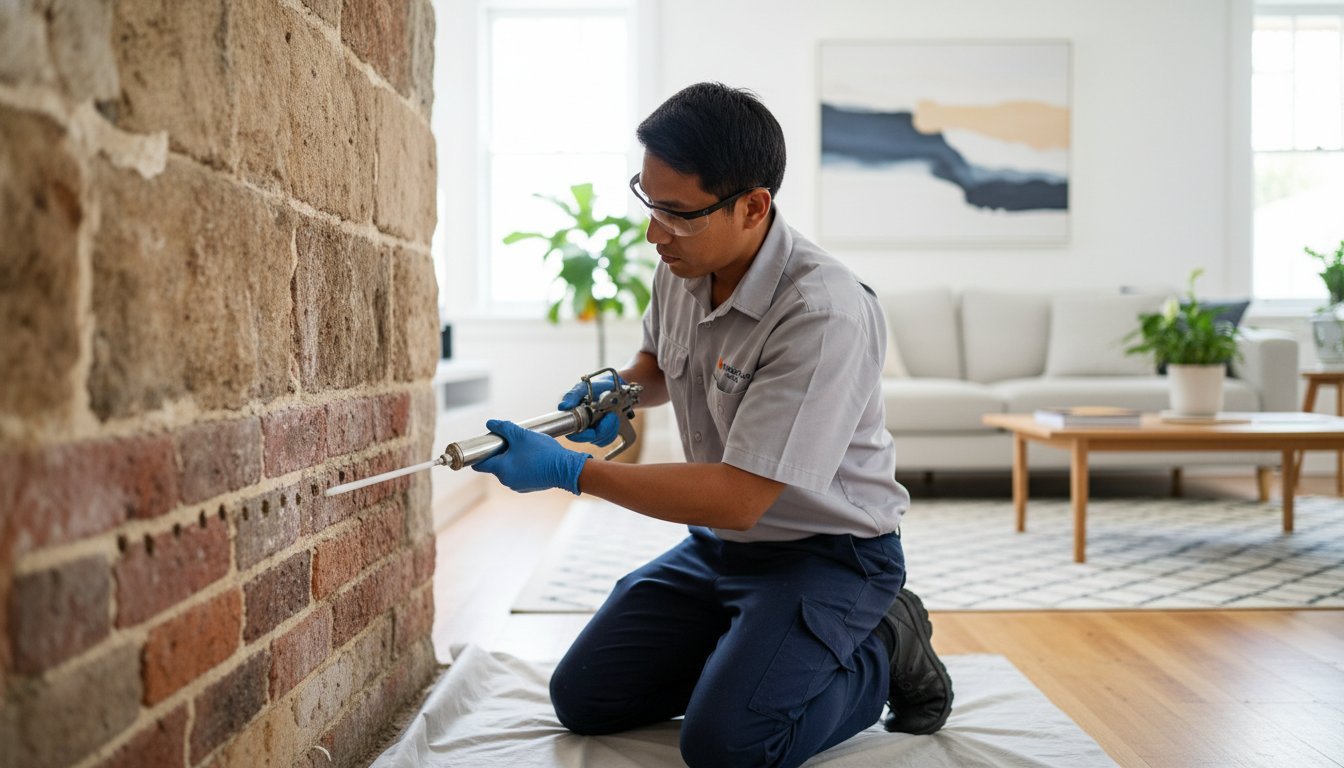
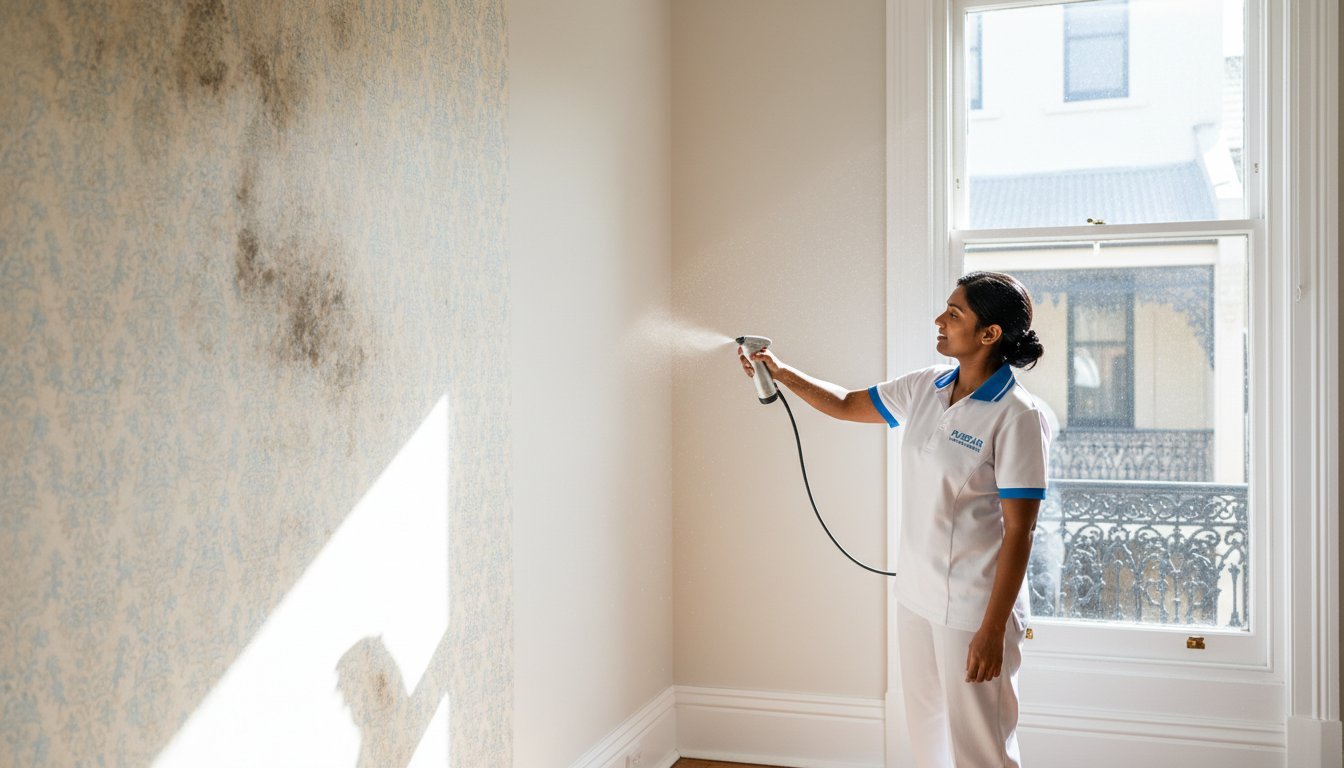
The core of the Goldmorr Advantage is our biodegradable fogging process. Unlike traditional chemicals, this fog is safe for people, pets, and the environment, making it the ideal choice for nurseries. The fog travels exactly where mould spores go, penetrating deep into fabrics, carpets, and wall cavities to eliminate the threat at a cellular level. This is the most effective way how to keep baby safe from mould, as it addresses the invisible airborne spores that standard cleaning misses. We combine this with non-mechanical air scrubbing and HEPA filtration to remove 99.97% of particles as small as 0.3 microns. This rigorous approach meets the new AS-IICRC S520:2025 standard, providing a consistent, verified baseline for your family’s safety.
The Dangers of DIY Disturbance
Scrubbing a patch of black mould without proper containment is dangerous. This physical agitation releases a massive burst of millions of spores and mycotoxins into the air, which your baby can easily inhale. Common home remedies like vinegar or clove oil are often inadequate for deep-seated infestations in Sydney’s porous building materials. Professional containment using negative air pressure and physical barriers is the first step in a safe remediation plan to ensure spores don’t migrate to other rooms. Don’t risk cross-contaminating your entire home by attempting a “quick fix” on your own.
What to Expect During Professional Removal
Our 3-step process is designed for maximum efficiency and total peace of mind. We begin with a comprehensive inspection to identify the moisture source, followed by the application of the Goldmorr System to eliminate growth. Finally, we perform intensive air purification to restore your indoor air quality. Most average-sized rooms can be treated quickly, and we provide clear guidance on when your family can safely return, typically within a few hours of the completed process. We also offer post-remediation testing to prove the air is safe for your baby. Contact our expert team today to schedule a professional assessment and secure your home’s health.
Long-Term Prevention: Subfloor Ventilation and Sydney Home Maintenance
Sydney’s unique geology and architecture play a massive role in your home’s air quality. Many older homes sit on sandstone foundations that soak up groundwater like a sponge. This moisture gets trapped in the subfloor, the dark space beneath your floorboards. If this area lacks proper airflow, the dampness rises into the living spaces, significantly increasing the humidity in ground-floor nurseries. This is a primary driver behind how to keep baby safe from mould over the long term. You cannot simply clean the walls if the moisture is coming from beneath your feet. Professional intervention is required to break this cycle of dampness.
A professional subfloor ventilation system is the most effective way to stop moisture before it enters your living space. In an average-sized Sydney home, a professionally installed system typically costs between $2,500 and $4,500. While the initial investment is significant, high-efficiency fans are incredibly cheap to run, costing only $50 to $80 per year in electricity. These systems work by constantly replacing damp, stagnant air with fresh outdoor air. This prevents the “rising damp” effect that fuels persistent fungal growth in your baby’s room. It’s a permanent solution that protects both your family’s health and your property’s structural integrity.
Addressing Rising Damp and Subfloor Moisture
If your nursery feels perpetually cold or has a faint musty smell despite constant cleaning, your subfloor is likely the culprit. Look for salt crusting on brickwork or “tide marks” on skirting boards. Mechanical ventilation is far superior to natural vents in Sydney’s humid climate, as it guarantees a consistent air exchange rate even on still, foggy days. If you suspect a more immediate issue like a burst pipe under the house, refer to our guide on water damage repair. Addressing these leaks immediately is vital to prevent a minor plumbing issue from becoming a major fungal outbreak.
Daily Habits for a Mould-Free Home
Structural fixes must be paired with daily vigilance to ensure a healthy environment. During the Sydney wet season, when outdoor humidity is high, use a dehumidifier to pull moisture from the nursery air. Never dry wet laundry inside the house; a single load of washing can release up to two litres of water into your indoor environment. Finally, make it a habit to perform the hotspots check from your Nursery Audit every month. Regular inspections allow you to catch moisture before it turns into a colony. It’s that simple. It’s that easy to maintain a healthy home for your baby when you have the right systems in place.
Secure Your Nursery’s Air Quality Today
Your baby’s health is too precious to leave to chance or ineffective DIY cleaning methods. By understanding the structural risks of Sydney homes and maintaining a strict nursery audit, you have already taken the first steps toward a healthier environment. Infants breathe up to 60 times per minute, making them highly sensitive to the invisible spores that thrive in high humidity. Real protection requires moving beyond surface wiping to address the root causes of dampness and airborne toxins.
Knowing how to keep baby safe from mould means choosing professional solutions that are scientifically proven and non-toxic. Our Certified Goldmorr Master Technicians use a specialized, biodegradable, baby-safe fogging process to eliminate spores without leaving harmful residues behind. We also provide a 24/7 emergency water damage response to stop infestations after storms or leaks. It’s that simple. It’s that easy to restore your peace of mind and ensure your child breathes clean air every night.
Protect your baby with a professional mould inspection today; we will beat any written quote by 10%. Your family deserves a home that is safe, dry, and healthy.
Frequently Asked Questions
Is it safe for my baby to sleep in a room with mould?
No, it is never safe for an infant to sleep in an environment with active mould growth. Infants have a rapid respiratory rate, breathing between 30 and 60 times per minute, which means they inhale a higher volume of spores relative to their body weight. The World Health Organization advises that no level of indoor mould exposure can be considered safe for developing immune systems. You should move your baby to a clean room immediately until professional remediation is complete.
What are the symptoms of mould exposure in infants?
Common signs include persistent wheezing, chronic coughing, and unexplained nasal congestion that doesn’t clear up. You might also notice skin irritations, such as rashes or worsening eczema, which are often triggered by fungal spores. Since 34% of Australians reported mould in their homes in a 2022 survey, these symptoms are a frequent concern for local parents. If the symptoms improve when the baby leaves the home, the indoor air quality is likely the culprit.
Can I use bleach to clean mould in a nursery?
Don’t use bleach in a baby’s room. Bleach is a harsh respiratory irritant that can damage sensitive lung tissue and it doesn’t actually kill the mould’s root system on porous surfaces like drywall. Because bleach is 99% water, it often provides the moisture mould needs to grow back even more aggressively. It’s much safer to use professional, non-toxic methods that don’t leave chemical residues behind.
How do I know if the mould in my baby’s room is toxic black mould?
Toxic black mould often appears as a slimy, dark green or black patch and carries a distinctively pungent, earthy smell. However, you can’t identify the specific species just by looking at it. Professional air and surface testing is the only way to confirm if the growth is producing dangerous mycotoxins. If you see dark staining and your baby is showing respiratory symptoms, treat the situation as an emergency.
Do air purifiers help protect babies from mould spores?
Yes, air purifiers with HEPA filters are effective at capturing 99.97% of airborne particles as small as 0.3 microns, including mould spores. They are an excellent tool for improving nursery air quality and reducing the immediate risk of inhalation. While they help clean the air, they don’t fix the underlying moisture problem. You must still locate and eliminate the source of the growth to ensure long term safety.
How far should a baby’s cot be from the wall to prevent mould?
Place the cot at least 5cm to 10cm away from any external walls. This gap prevents the “Cold Wall” effect, where warm indoor air meets a cold surface and creates condensation. Maintaining this distance allows for vital air circulation and prevents moisture from being trapped against the mattress or bedding. It’s a simple, free habit that significantly reduces the risk of hidden fungal colonies forming behind the cot.
What is the safest way to remove mould if I have a newborn at home?
The safest method for how to keep baby safe from mould is professional remediation using a biodegradable fogging process. Our master technicians use the Goldmorr System to eliminate spores without the use of toxic chemicals, making it safe for your newborn to return to the room shortly after treatment. This process removes the invisible airborne threat that DIY scrubbing often misses, ensuring the nursery air is laboratory clean.
Will a dehumidifier stop mould from growing in my baby’s room?
A dehumidifier is a powerful prevention tool because it keeps the room’s humidity within the 40% to 60% “Goldilocks” zone. Mould generally requires humidity levels above 70% to thrive, so removing excess water from the air stops new colonies from forming. Using a dehumidifier is a proactive way how to keep baby safe from mould during Sydney’s humid months, though it won’t remove mould that is already physically present on your walls.